Choosing a wedding invitation design
The Dawaitna Team · 2026-10-02
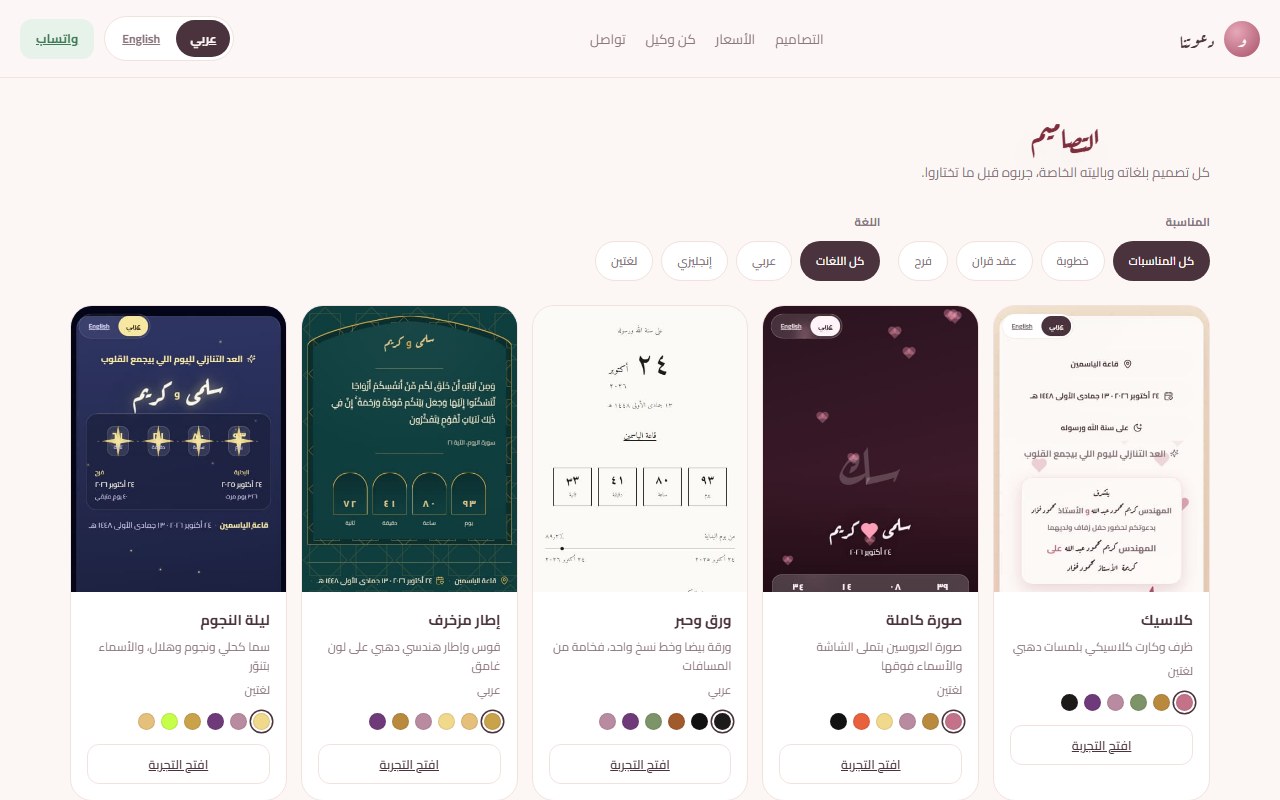
Most people choosing a design spend their time on the look: colour, font, ornament. That is natural. But a few practical things change the guest's experience, and they usually only show up after the invitation has gone out.
Does it feel like your wedding?
An ornate design with a gold frame suits a formal wedding in a big hall, and it can feel heavy for a katb kitab at home. The opposite is true too: a quiet design like Paper & ink may not carry the weight of a 500-person hall. Some designs have a clear character: Khayamiya with its tent-maker patterns and joyful baladi mood, the Nubian house in Aswan colours, the Cinema poster with its old-film spirit. Pick the one that looks like your laugh, not the one that looks most expensive.
The language your guests read
Not every design has an English version. The storybook, Paper & ink, the arabesque frame and Khayamiya are Arabic only. If some of your guests do not read Arabic well, pick a design that supports both, and a language switch appears inside the same link. The themes gallery lists the languages beside each card, so you can filter before you fall for one.
Is the type readable on a small phone?
Most of your guests will open the invitation from WhatsApp, on a phone that may not be new. A decorative Ruqaa script looks lovely on a big screen and can make the hall's name hard to read on a small one. Each design offers three fonts, so choose the clearest if your guests are older. Test on your own phone, not in a desktop preview.
Every design wants something from you
This is the part people do not count on. Each design is built around one thing, and looks incomplete without it:
- Photo hero and Polaroid scrapbook: a photo of the couple.
- Classic: a closing dua. Arabesque frame and Mashrabiya: a verse.
- Ticket, Poster and Blush & champagne: the names in English.
- Storybook: at least 3 questions about your story.
- Marble & gold and Royal emerald: the father's name, or both.
- Indigo & brass: a schedule.
- Midnight glam: a dress code.
- Jasmine garden and Nubian house: directions in your own words.
The request shows up before you publish. So if you have no good photo, skip the photo designs. And if you have the fathers' names, Marble & gold looks better with them.
Colours
Each design has six colours to choose from, and you do not have to stay with the first. Light greens and creams suit a summer garden. Navy and burgundy suit a winter night in a hotel. If the wedding has a signature colour (the dress, the flowers, the hall decoration), let the invitation match it, so the guest arrives and feels the invitation and the place belong to the same story.
Three cases
A large wedding in a hall. Marble & gold or Royal emerald for a formal opening with both families' names. Midnight glam for a formal evening with a dress code. Indigo & brass if you have a schedule with a reception, the contract and dinner.
A katb kitab or engagement at home. Warm linen or Jasmine garden give a warm feel without extra grandeur. Jasmine garden asks for directions in your words, which helps anyway if the house is hard to find.
Couples abroad or guests who do not read Arabic. Ticket, Poster or Starry night, all of which support English. Write the names in Latin letters as they appear in the passport.
The choice is not final
Design, colours and fonts can be changed from the editor until the event starts, and the link does not change. But anyone who opened the invitation early saw the first look, so open two or three demos on your phone before you send it.
Mistakes we see
Choosing a photo design when there is no good photo. Choosing an Arabic-only design when some guests are foreign. Choosing a dark, delicate design for a grandfather who can barely read it. And choosing from a small thumbnail without opening it on a phone.
Each design is priced separately, and the pricing page shows how the total is worked out. There is also a free wedding invitation on the Noor design.