Tracking wedding RSVPs without a spreadsheet
The Dawaitna Team · 2026-09-26
Every couple goes through the phone-call stage: "Are you coming?" "How many are you bringing?" "You still have not answered, are you coming or not?" With 300 guests that is a week of work, and the count can still be wrong at the end.
The real problem
The calls take time, but the bigger problem is that the final numbers arrive late, and sometimes wrong. The caterer usually wants a number a week or ten days before the wedding. If you are still piecing together replies from scattered WhatsApp messages and a sheet of paper in the bride's handbag, the pressure lands at the worst moment.
The guest answers
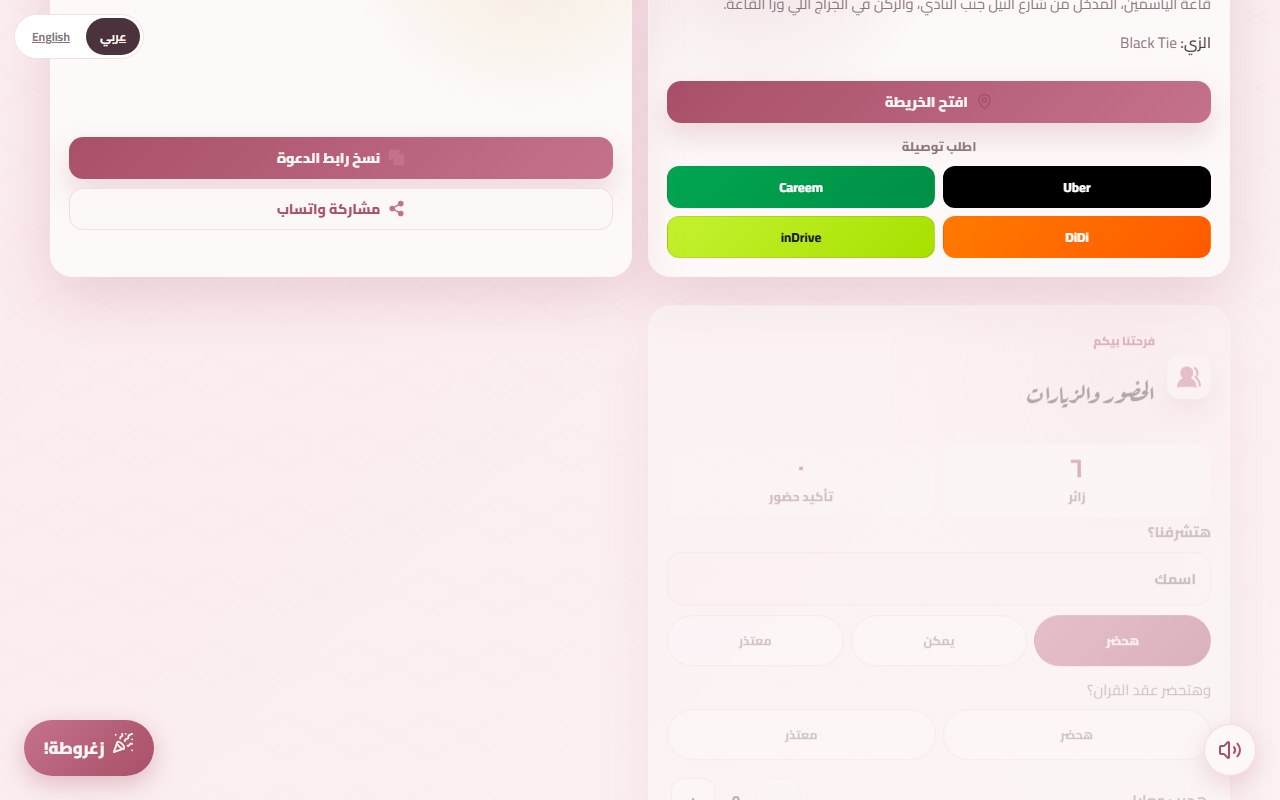
The invitation asks the guest: coming, not coming or maybe, and how many are with them. They type their name and tap. No account, no password, and the reply is recorded straight away. There is also a short note field for anything that needs arranging: a wheelchair, a dietary need, arriving after dinner. A guest who comes from a personal link on your guest list already has their name filled in, and the list sets how many places that invitation covers.
Each event has its own answer
Many weddings now run a henna night, a katb kitab and the wedding, each with a different list. The henna is at someone's house with 50 people, the wedding is in a hall with 400. If there is a single yes or no, you will not know who is coming to the henna only. When you add a schedule, each event in it collects its own reply, so you get a separate count per event. Your cousin who is only coming to the wedding does not get counted in the henna food.
A worked example
Your list has 350 names. 240 answer yes and say they are bringing 60 more, so that is 300. 25 say maybe. 30 decline. 55 have not answered. The number for the caterer is not 350 and not 300. It is 300 plus half of the 25 maybes, so about 310, with a small margin. After a week of follow-up that number moves, which is normal. What matters is that you are reading real numbers each time, not remembering them.
Numbers become decisions
Catering is priced per head, so the gap between 320 and 380 is 60 meals. The hall needs to divide tables by an actual figure. The decorator asks how many tables. If the number is a guess, you either pay for food nobody eats or find 25 guests standing.
The ones who do not answer
About one in five will not reply, not because they are boycotting the wedding, but because the message landed on a busy day. Do not phone everyone. Send each one a single private message after a week. After a second week, phone only the people who matter most: close family and old friends. For distant colleagues, silence after two messages usually means they are not coming, so count them that way. And if someone turns up without replying, the hall can usually fit one more table.
Where you see the numbers
If you built the invitation yourself, you follow the replies from your own account under "Messages and RSVPs": every reply with a name and a count, and totals for coming, maybe and declined. If an agent made your invitation, you get a private follow-up code, and with it you read the replies and messages. That list is what you send to the caterer.
A simple timeline
A month before: send the link. Two weeks later: a reminder to those who have not replied. Ten days before: fix the number with the caterer. A week before: phone the maybes and get a decision. After that, any change is handled by a phone call, not by changing the number.
Mistakes we see
Mixing the henna and the wedding in one question. Using WhatsApp chats as the source of numbers, then somebody says "I told you" and you cannot find the message. And forgetting that a yes can become a no: keep reading the list until the last week.
If the wedding is large, there is a next step: a personal link per guest, and an entry QR pass scanned at the door so you know who actually arrived. You add the guest list in your account, or the agent does on a page they made. Try the demo and fill in the RSVP form yourself before you start.